N5, N7, and N8 Applications for LTB in Ontario: Common Mistakes Landlords Make

Introduction: Understanding Tenant Behaviour Applications in Ontario
Landlord-tenant disputes in Ontario often escalate when behaviour, safety, or chronic late rent comes into play. The Landlord and Tenant Board (LTB) provides landlords with specific forms—N5, N7, and N8—to address these issues. Each form serves a distinct legal purpose, but many landlords slip up by using the wrong one. This mistake can delay evictions, lead to dismissals, and even embolden the tenant.
Below we break down how each form works, when to use it, and the most common pitfalls landlords face.
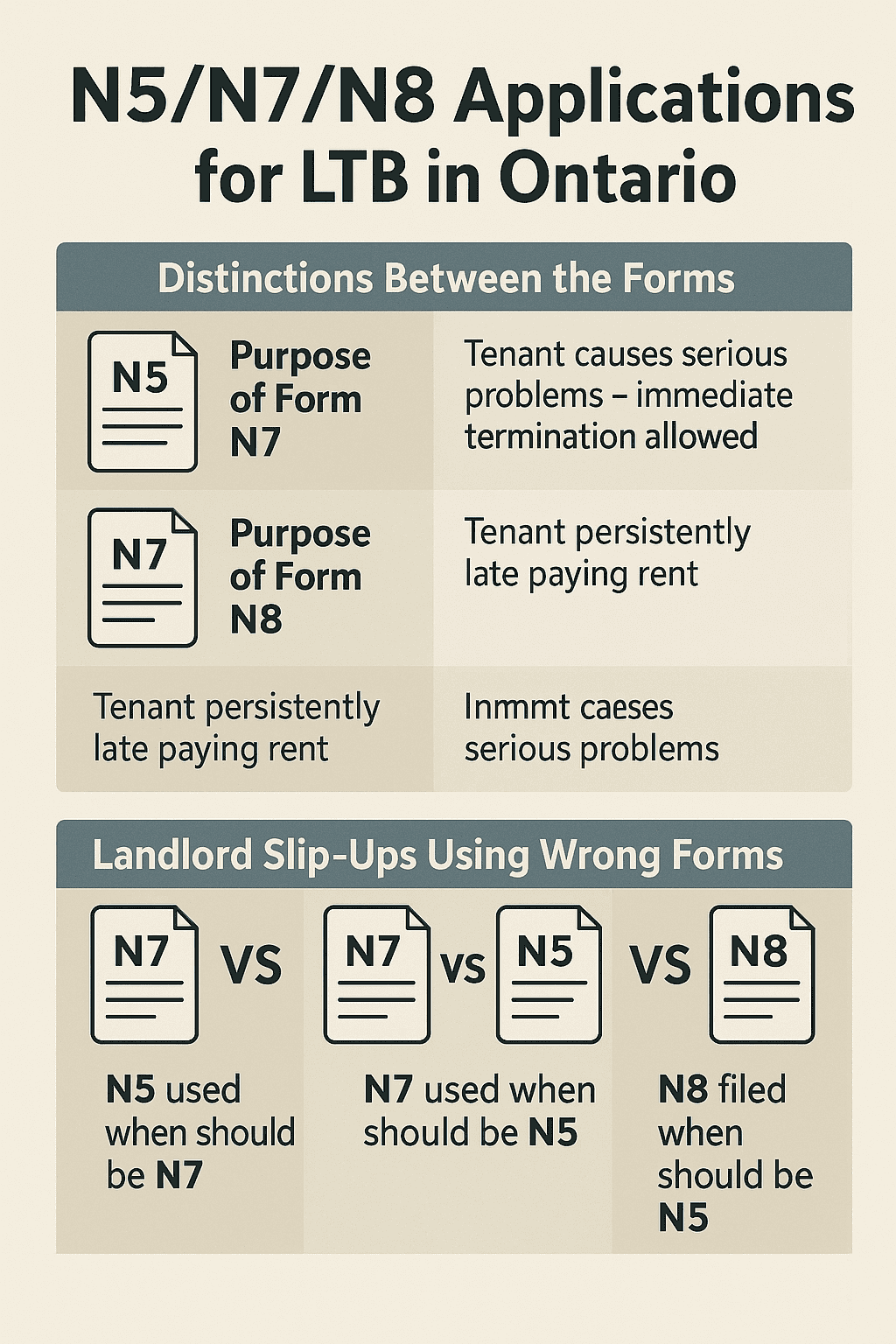
What Are N5, N7, and N8 Forms?
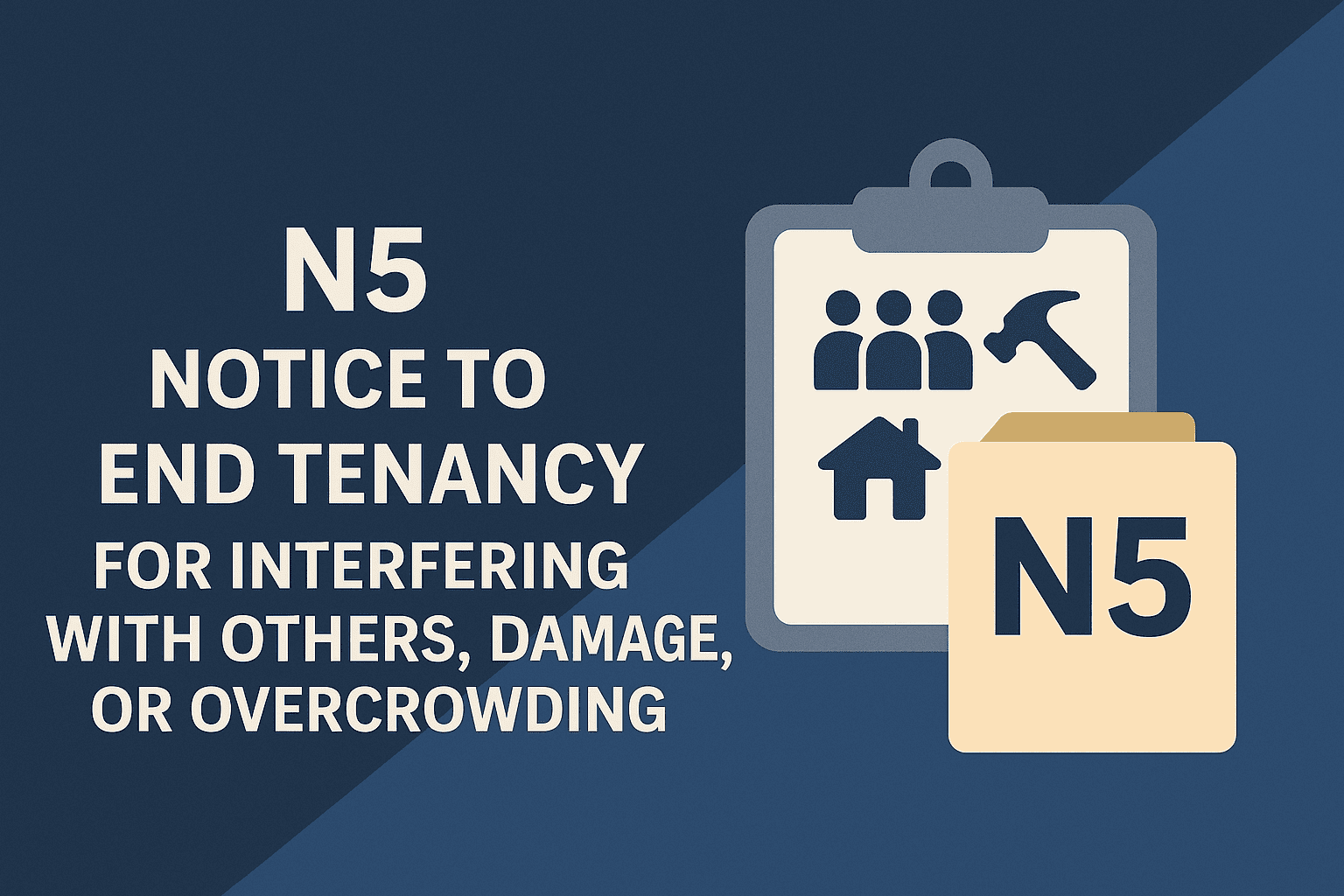
The Purpose of Form N5
Used when a tenant is disturbing others, damaging property, or overcrowding the unit. The tenant is given an opportunity to correct the behaviour (e.g., reduce noise, repair damage).
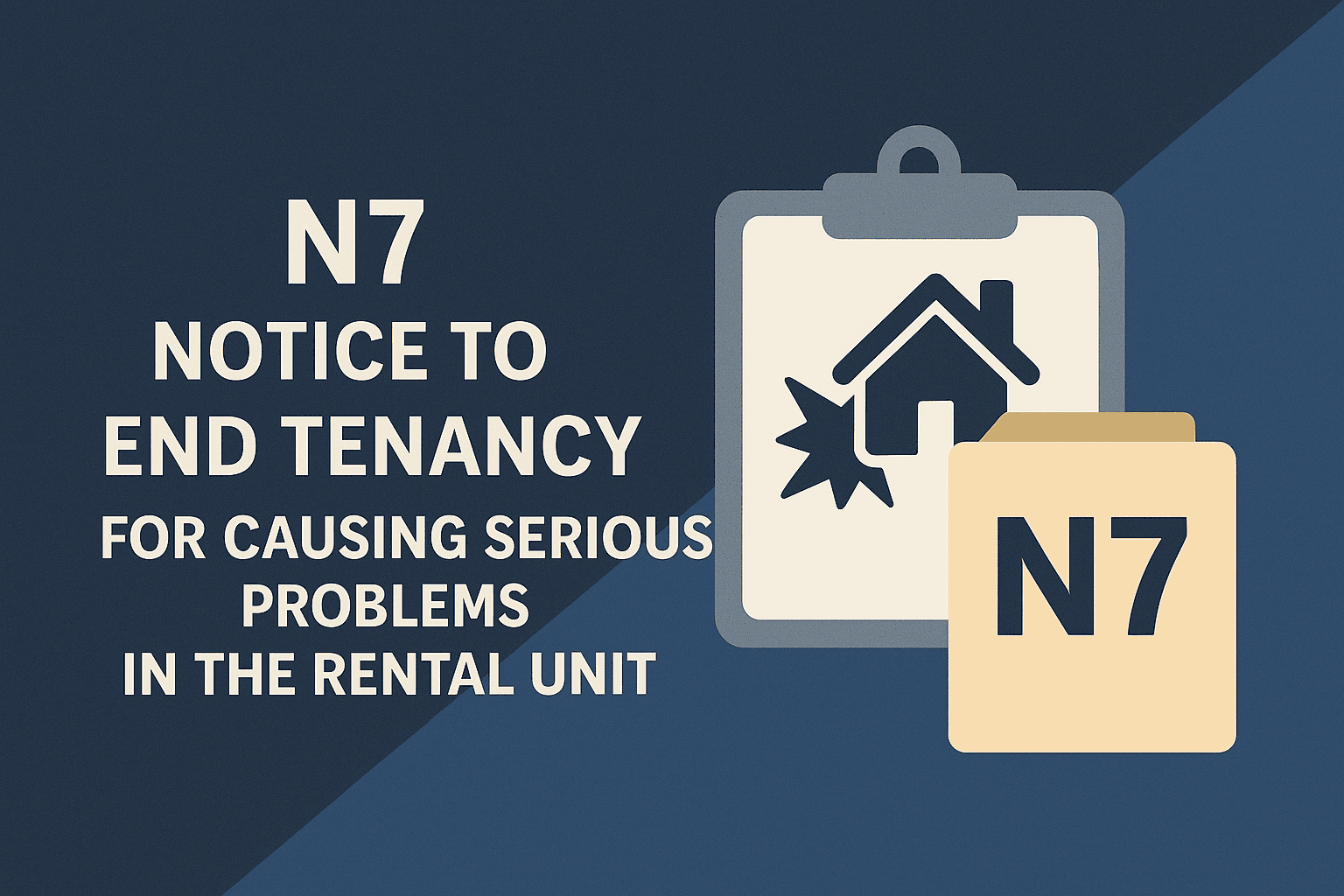
The Purpose of Form N7
Reserved for serious issues that justify immediate termination or a short notice period, such as:
- Seriously impairing someone's safety
- Wilful or undue damage to the unit or complex
- Serious problems where the tenant shares a kitchen or bathroom with the landlord
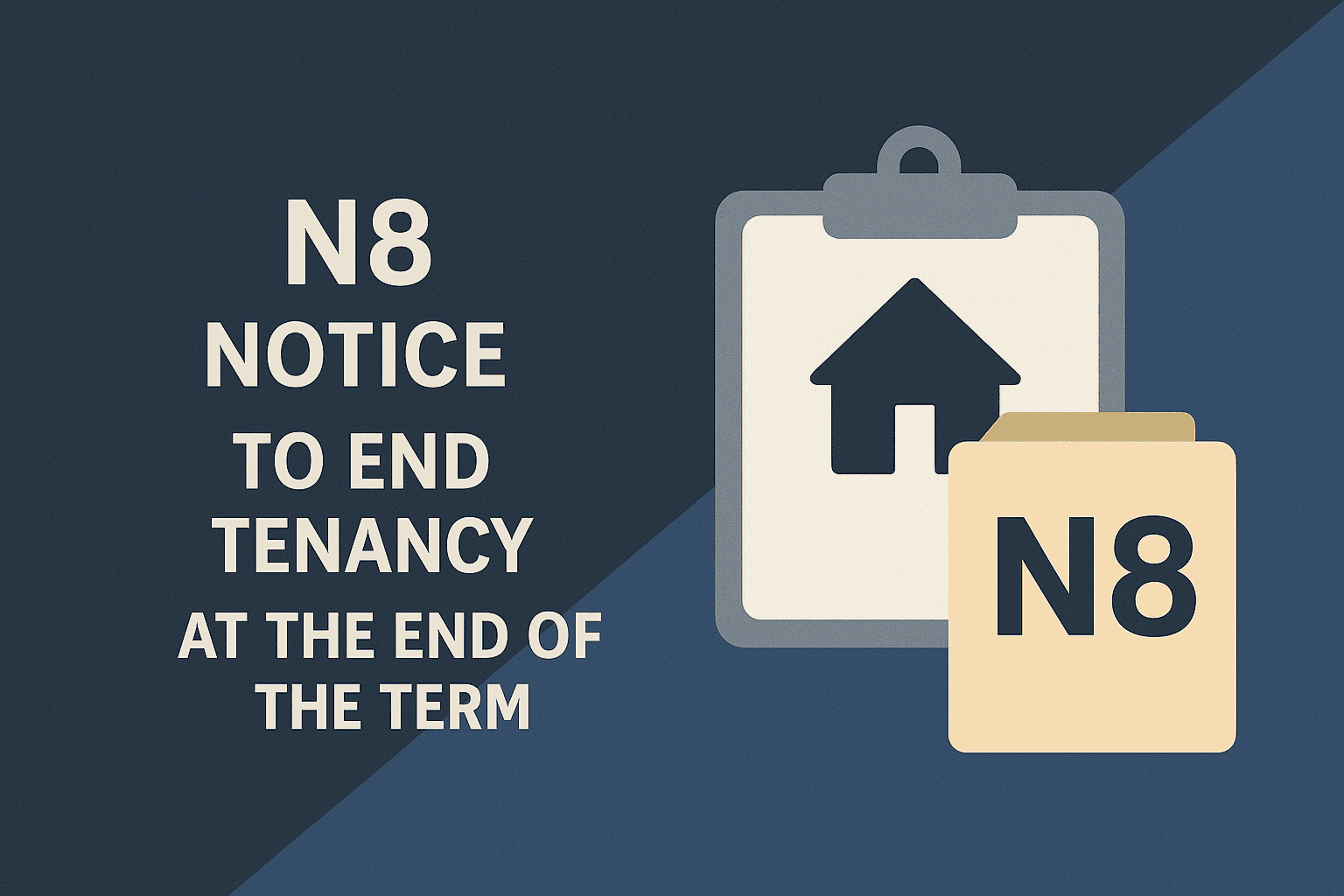
The Purpose of Form N8
Used for chronic late payment of rent. Focuses on the pattern of late payments and proper documentation of due dates and receipts.
Key Differences Between N5, N7, and N8 Notices
Behaviour vs. Persistent Late Payment
- N5 / N7: Behaviour and safety.
- N8: Timing of rent only.
Immediate Termination (N7)
Use N7 when the conduct is so serious that correction is not appropriate (e.g., violence, a serious safety threat, wilful destruction). Illegal acts, such as drug trafficking, are an N6 ground, not N7.
Correction vs. Eviction (N5 vs. N7)
N5 offers the tenant a chance to correct behaviour. N7 moves directly to termination. Misclassifying harms your case.
Common Landlord Mistakes With Tenant Behaviour Applications
Using N5 When N7 Is Required
Example: A tenant assaults another tenant. Serving N5 (which offers time to correct) can lead to dismissal because violence is an N7 ground.
Using N7 When N5 Should Be Used
Example: Loud music or routine disturbances generally require N5 first. N7 here is likely to be dismissed.
Filing N8 for Behaviour Issues
N8 is for late rent patterns, not noise, interference, or damage.
Case Examples of Misused Forms
- Noise complaints & misuse of N7: Serving N7 for loud music typically fails; this is usually an N5 issue unless tied to threats/safety.
- Safety threats & misuse of N5: Damaging fire systems or similar safety risks call for N7; N5 may be dismissed.
- Chronic late rent & N8 confusion: Repeated late payments require N8, not N5.
How the LTB Responds to Wrong Notices
Dismissals Without a Hearing
Using the wrong notice can trigger immediate dismissal.
Adjournments & Lost Time
Even if not dismissed, matters are often adjourned, causing months of delay.
Relationship Impact
Misfiled forms escalate tension and can embolden ongoing disruptive behaviour.
Best Practices for Landlords to Avoid Mistakes
Document Behaviour
Keep dated logs, complaints, police reports, photos, and repair invoices.
Choose the Right Form
- N5: Disturbances/damage that can be corrected.
- N7: Serious safety issues and wilful damage (illegal acts go on an N6).
- N8: Chronic late rent.
Get Professional Guidance
Upfront advice avoids restarts, adjournments, and preventable dismissals.
FAQs About N5, N7, and N8 Applications in Ontario
Can I serve N5 and N7 at the same time?
Yes, if the facts support both—for example, repeated disturbances (N5) plus a safety threat (N7).What happens if I serve the wrong notice?
The LTB may dismiss your case or adjourn it, forcing a restart and delaying resolution.Does N7 always mean immediate eviction?
Not always. Some N7s have a short notice period (e.g., 10 days). Outcomes depend on facts and evidence.Can tenants fight N8 late rent notices?
Yes—by arguing payments are generally on time or late for reasons beyond their control. Documentation is key.What’s the most common mistake?
Using N5 for serious issues that require N7—or using N7 where an N5 “cure” opportunity is required.How many late payments are needed for N8?
Since September 21, 2026, the RTA defines it: rent received more than seven days after the due date at least three times within a six-month period. A payment you applied to other arrears does not count as late.Conclusion: Navigate Behaviour Applications with Precision
Navigating the LTB system requires careful notice selection and disciplined evidence. Serving the wrong notice—N5 instead of N7, or N8 instead of N5—can sink a case before it starts. Landlords who document thoroughly and seek professional guidance are far more likely to succeed.
For official reference material, see the Ontario LTB’s forms and resources.