
Jump to: LTB overview · N4 notice · L1 application · Rent ledger · Perfecting the N4 · Payment plans · s. 78 orders · Hearing process · FAQs
Understanding the Landlord and Tenant Board (LTB) in Ontario
The Landlord and Tenant Board (LTB) is Ontario’s tribunal for resolving disputes between landlords and tenants under the Residential Tenancies Act, 2006 (RTA). When rent arrears occur, the LTB provides a structured legal process to ensure both sides are treated fairly.
For landlords, the process ensures a clear path to recover unpaid rent. For tenants, it provides protections and opportunities to correct defaults before facing eviction.
What is an N4 Notice of Eviction?
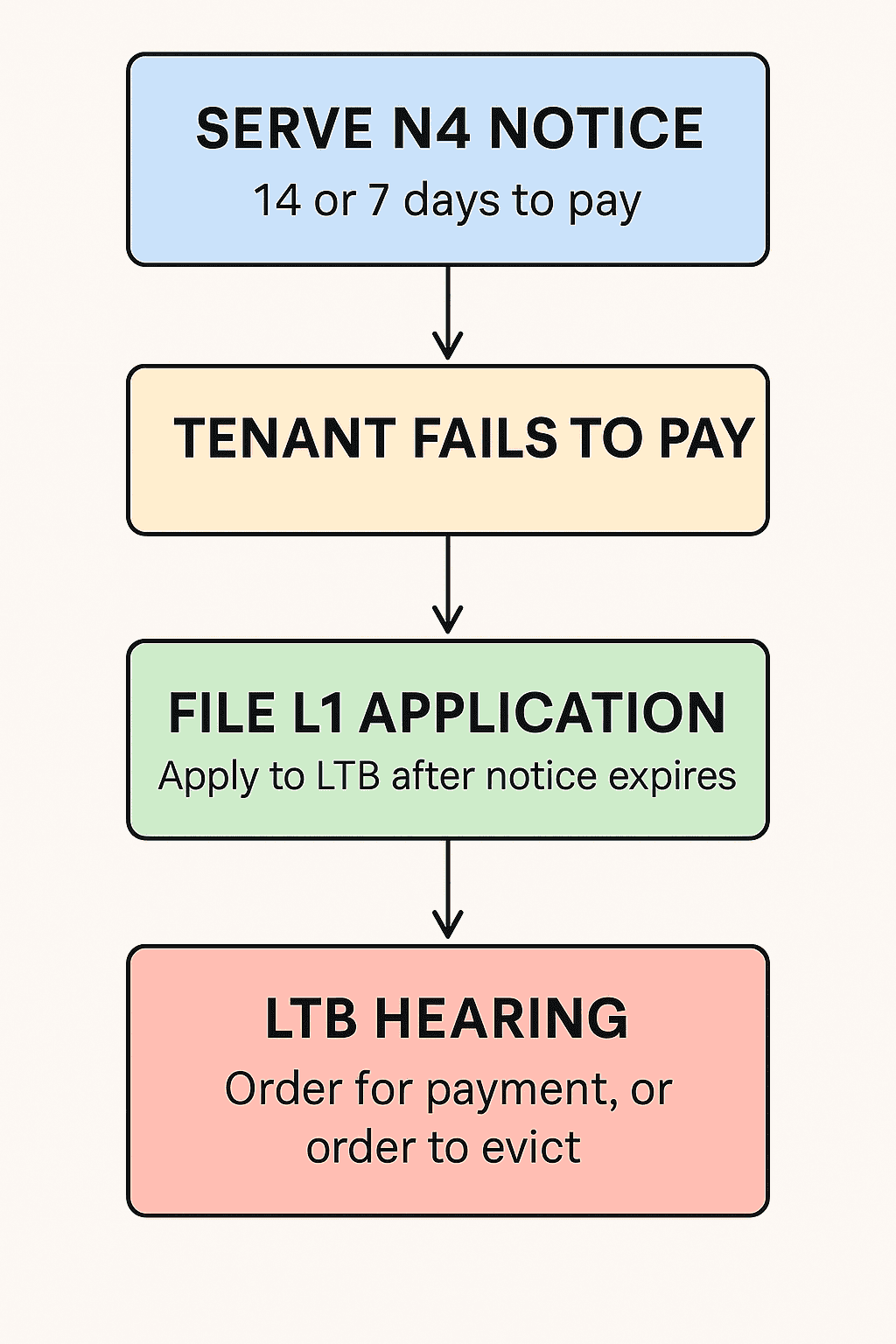
The N4 — Notice to End a Tenancy Early for Non-Payment of Rent is the first step in Ontario’s eviction process. It tells tenants they owe rent and gives them a legal deadline to pay before eviction proceedings begin.
- 7 days notice for N4s given on or after September 21, 2026, whether rent is paid monthly, yearly, weekly or daily.
- N4s given before September 21, 2026 needed 14 days for monthly or yearly tenancies.
If the tenant pays the full amount by the deadline, the N4 is void. If not, the landlord may file an L1 Application with the LTB.
The L1 Application: Applying to Evict for Non-Payment of Rent
The L1 Application is the landlord’s formal request to terminate the tenancy after the N4 expires without full payment.
To succeed, landlords must provide:
- A copy of the N4 notice.
- Proof of service.
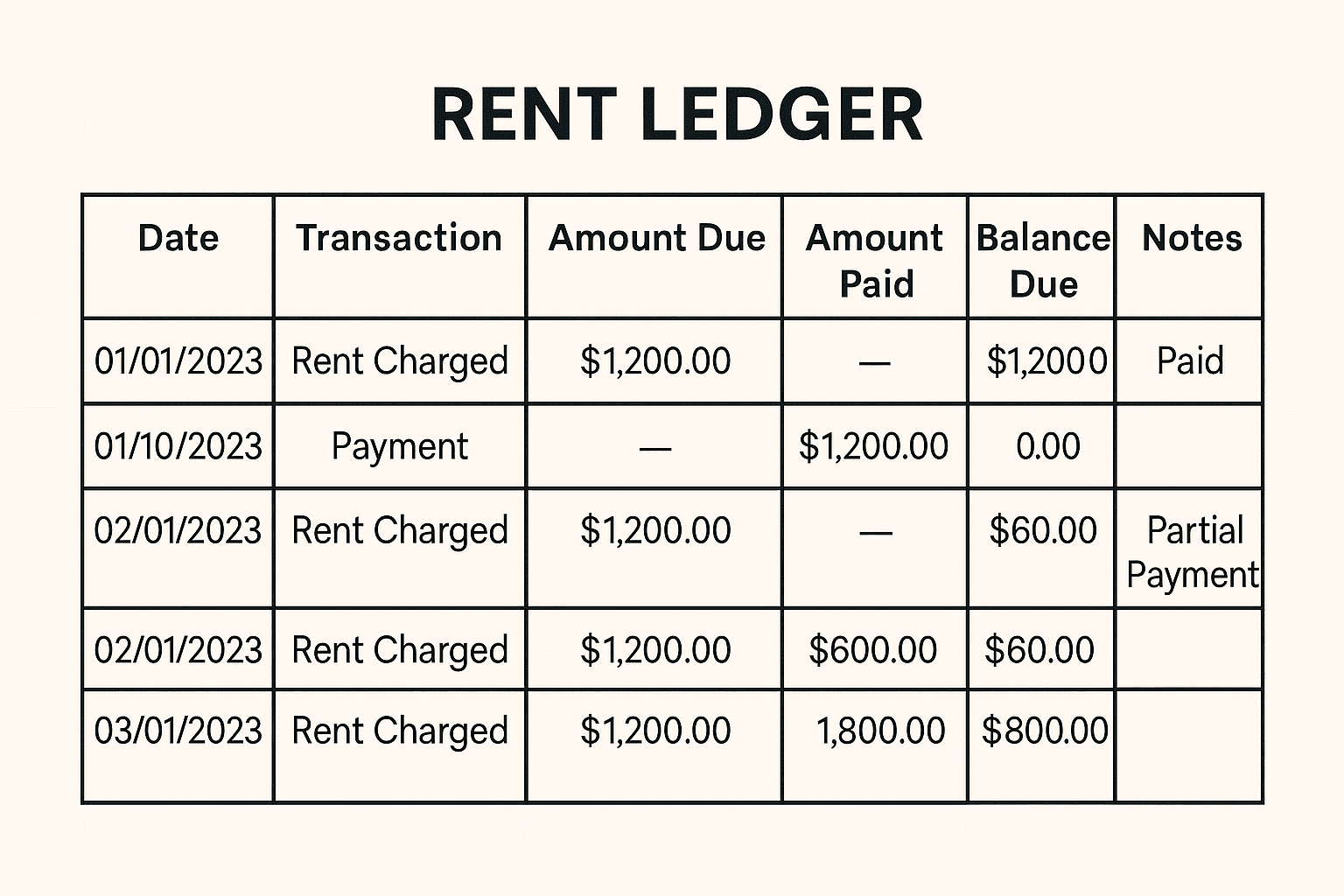
- A detailed rent ledger.
The ledger is crucial—it shows the exact arrears and prevents disputes over calculations.
The Importance of Using a Ledger in Eviction Cases
A rent ledger is the strongest evidence in an eviction case.
- For landlords: It proves arrears with accuracy, builds credibility, and speeds up hearings.
- For tenants: It can confirm payments, challenge errors, or show that arrears aren’t as high as claimed.
The Perfection of the N4 Notice: Why Precision Matters
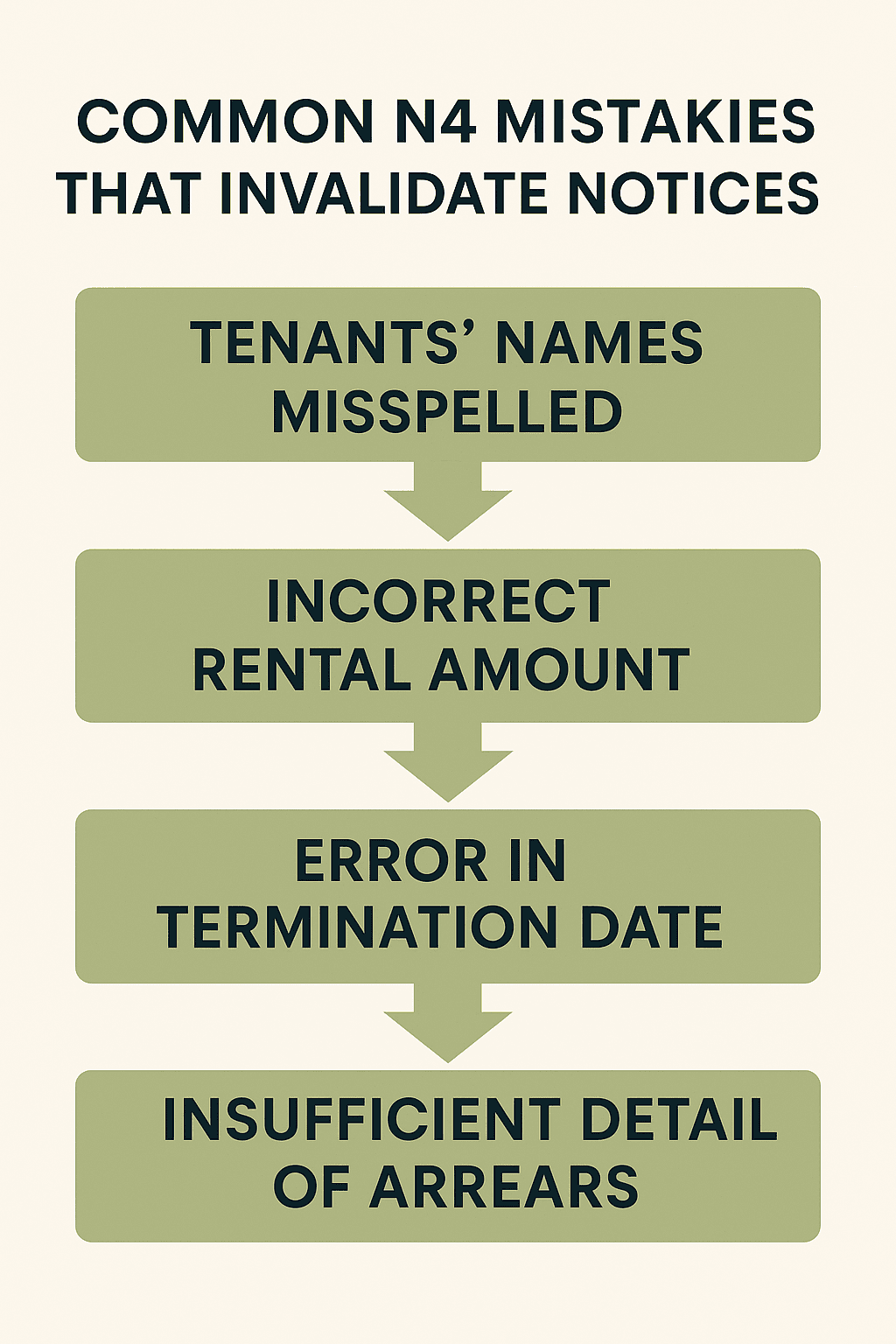
The N4 must be perfect. The LTB treats it as a strict legal document, and even small errors can invalidate it.
Common mistakes include:
- Incorrect rent amounts.
- Wrong dates or calculation errors.
- Improper service, or no proof of how and when the notice was served.
Payment Plans: Negotiating Between Landlord and Tenant
Many evictions can be avoided with payment plans. At an LTB hearing, adjudicators often encourage landlords and tenants to negotiate repayment schedules. These plans allow tenants to remain in their homes while catching up on arrears.
Risks: If tenants default, landlords may seek automatic eviction orders under s. 78 without another full hearing.
Benefits: Tenants stay housed, landlords recover arrears, and both avoid the disruption of eviction.
Section 78 Orders: Automatic Evictions for Breach of Terms
Under s. 78 of the RTA, landlords can obtain automatic eviction orders if tenants default on payment plans made at the LTB.
- If a tenant misses a scheduled payment, the landlord can apply for eviction without a new hearing.
- Tenants may request a review to set aside the order, but they must act quickly (usually within 10 days).
This rule gives landlords security while still protecting tenants from unfair eviction if they can show a valid reason for default.
Hearing Process for N4/L1 Evictions
At the LTB hearing:
- Landlords must show that the N4 was properly served, the arrears are correct, and the ledger is accurate.
- Tenants may argue payments were made, the notice is defective, or raise repair/maintenance issues. For applications filed on or after September 21, 2026, a tenant who wants to raise those issues must first pay the landlord half of the arrears claimed, at least 7 days before the hearing.
Adjudicators may order eviction, grant a payment plan, or dismiss the application.
Common Misconceptions about N4 and L1 Evictions
- Myth: An N4 means automatic eviction. False — tenants can pay and void the notice.
- Myth: Partial payments stop eviction. False — only full payment of arrears halts the process.
Practical Tips for Landlords and Tenants
Landlords should:
- Keep detailed ledgers.
- Double-check N4 forms before serving.
- Be open to payment plans where feasible.
Tenants should:
- Pay arrears before the N4 deadline if possible.
- Keep receipts and personal ledgers.
- Negotiate repayment plans at the hearing.
FAQs on N4 L1 Evictions in Ontario
Q1. Can a landlord evict immediately after serving an N4?
No, tenants must be given the legal notice period (7 days for N4s given on or after September 21, 2026).
Q2. What happens if the N4 is incorrect?
The LTB may dismiss the case, forcing the landlord to restart.
Q3. Do partial payments cancel the N4?
No, only full arrears payment does.
Q4. What is a s. 78 eviction order?
An automatic eviction order if a tenant defaults on a payment plan made at the LTB.
Q5. Can tenants fight a s. 78 order?
Yes, but they must file a motion to set aside quickly.
Q6. Is a rent ledger mandatory?
Yes, it is expected and often required at hearings.
Conclusion: Navigating N4 L1 Evictions Fairly and Legally
The N4 L1 eviction process in Ontario is designed to balance landlord rights with tenant protections. For landlords, accuracy, proper record-keeping, and patience are essential. For tenants, paying arrears on time and understanding their rights can prevent eviction.
When both sides engage fairly, the system can work efficiently and equitably under the guidance of the LTB.
Need help with an N4/L1?A quick pre-hearing review can prevent fatal defects and delays.